R3D End-to-end · Adobe Magento 2 · built with AI agents
Reality 3 Dreams — An e-commerce store designed end to end
From the theme to the buying experience, an e-commerce store built entirely on Adobe Magento 2, with the business features proposed and developed with AI agents.
A fully new platform, launched on 20 Sep 2026 and built entirely on Adobe Magento 2
R3DThe store
From the storefront to the 3D-print quote.
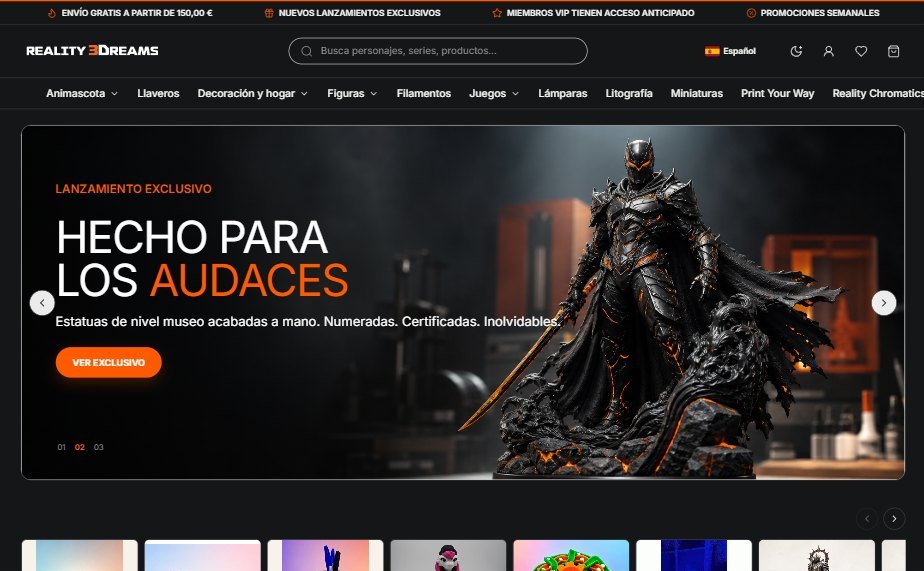
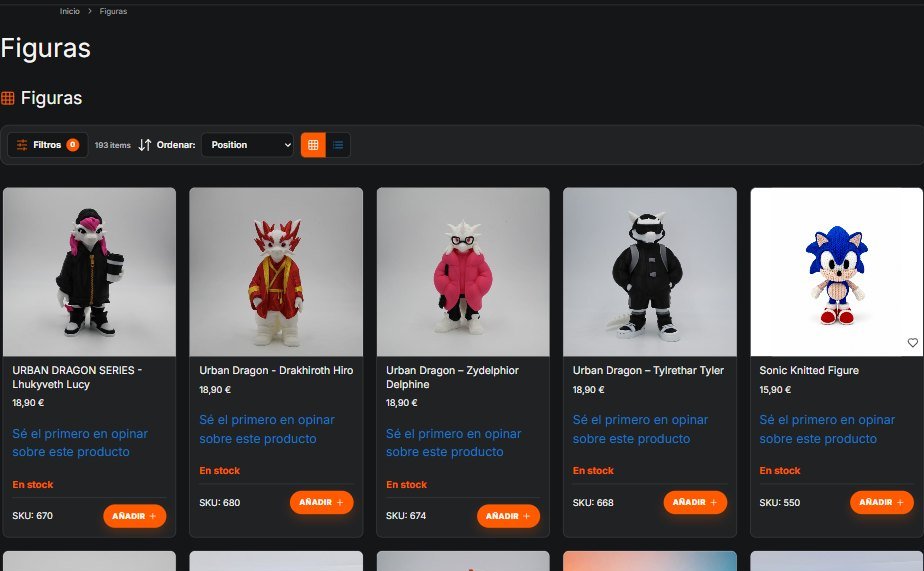
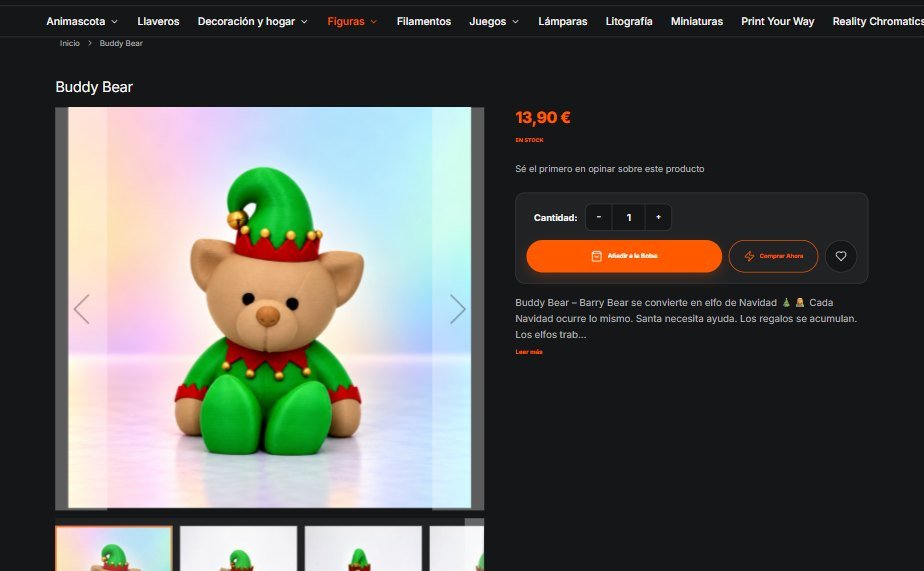
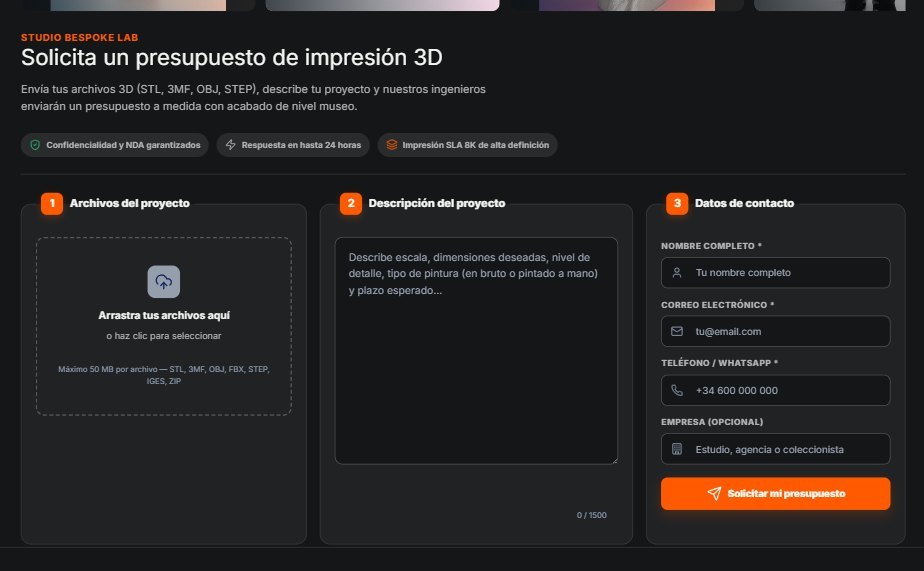
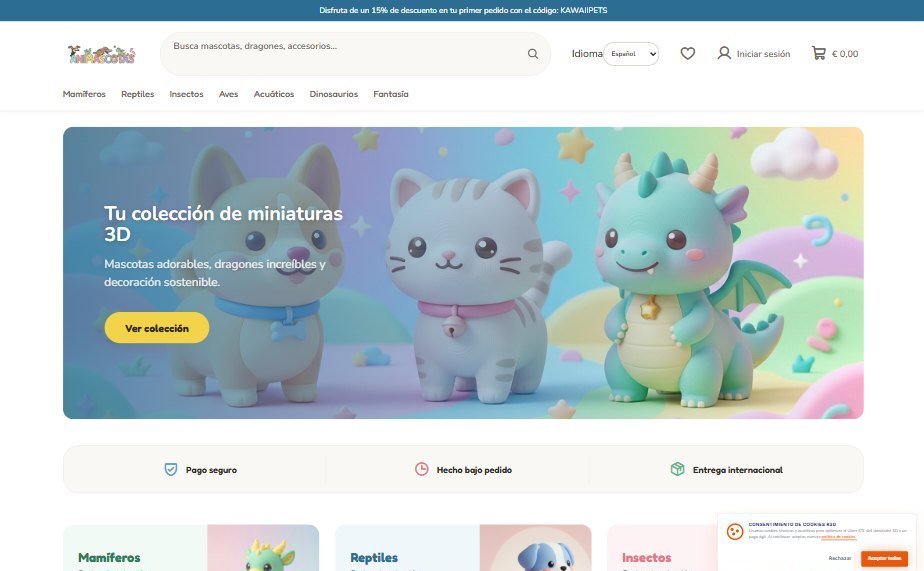
Screens of the live store (Sep 2026). Select an area to see the interface.
Context
Reality 3Dreams sells 3D printing and collectibles on a multi-store Magento 2 installation, in Spanish, English, and Portuguese, with checkout in euros. The project went beyond the visual layer: a theme of its own, business features, and the operation that keeps the store running.
Problem
Reconciling commercial needs, the buying experience, Magento's limits and capabilities, visual identity, new functionality, and operations. Default Magento handles catalog and orders; the opportunities I identified were beyond that: a 3D-print quote from the client's file, campaigns segmented by niche, and a partner program.
My role
Product Designer & AI Builder, through my studio OCTI: I identified the opportunities, defined the solutions, designed the experience, and used AI agents in Cursor to speed up exploration, prototyping, and development of the new features. Theme, design system, and features were built entirely on Adobe Magento 2, with a technical audit, runbooks, and documentation as part of the delivery.
Decisions
Leave the Smartwave Porto template for a theme of our own on Magento Blank, with the studio's design system as the source. In the print simulator, add the 3D viewer and the real flow — upload, estimate, cart — without redesigning the interface that already worked. On the microsites, keep Animascota's own identity and retire Chaveiros and Mascotes, which were test data. Treat documentation, runbooks, and anti-regression as part of the product.
Solution & artifacts
Screens and project details.
Design and technology as one product
The project connected experience strategy, interface, and implementation to create an e-commerce operation on Magento, with a theme of its own and features designed from the needs of the business.
- End to end — from the design system to the code, directing AI agents in Cursor.
- A tailored Magento — a theme of its own on Blank, instead of a ready-made template.
- Business-led features — 3D-print quoting, microsites, and partners.
The platform in four layers
-
Store
- a theme of its own
- catalog and product
- minicart and a 4-step checkout
Decision: a buying experience of its own
-
3D printing
- STL/OBJ upload
- 3D viewer
- estimate and cart
Decision: from the client's file to the cart
-
Growth
- microsites by niche
- a campaign tracked on the order
- partners and commissions
Decision: campaigns and partners that can be traced
-
Operation
- technical audit
- runbooks
- anti-regression
- documentation
Decision: a platform someone else can operate
What we discarded
Problem
Reconciling commercial needs, the buying experience, Magento's limits and capabilities, visual identity, new functionality, and operations. Default Magento handles catalog and orders; the opportunities I identified were beyond that: a 3D-print quote from the client's file, campaigns segmented by niche, and a partner program.
Qualitative result
Solutions designed to give the client operational and commercial autonomy, from the experience through to the Adobe Magento 2 implementation.
Tensions
- Magento × a tailored experience
- Speed × depth
- Template × identity
- Feature × simplicity
- Business × experience
Impact
An end-to-end project in which design and technology were treated as parts of the same product, from the definition of the experience to the implementation on Adobe Magento 2. The platform launched on 20 Sep 2026; technical and business metrics are not published yet.
What I learned
More than drawing screens, the work was to identify opportunities and create solutions meant to give the client operational and commercial autonomy. With the store just launched, that effect is still to be measured.